Start your free 30-day trial
Already using PAT Early Years Reading?
Upgrade to PAT Early Literacy at no additional cost for the remainder of your licence period.
Start now your free 30-day trial of PAT Early LiteracyEarly literacy assessment designed for today's classrooms
PAT Early Literacy is a comprehensive assessment program for Foundation and Year 1 students that measures three essential domains of literacy development:
- Phonics and Related Skills
- Listening Comprehension
- Reading Comprehension.
Together, these assessments provide a connected view of early literacy development, helping educators understand strengths, identify learning needs and target support effectively.

At a glance
- Designed specifically for Foundation and Year 1 students
- Guided, story-based assessment experience
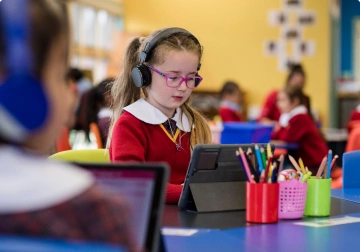
- Tablet based delivery with audio support
- Students can complete with minimal direct support
- Adaptive assessment in Listening Comprehension and Reading Comprehension
- Diagnostic reporting across three literacy domains through ACER Data Explorer
- Reading Comprehension aligned with the PAT Reading achievement scale
- Developed by ACER's assessment and literacy experts

See PAT Early Literacy in action
See how PAT Early Literacy engages young learners
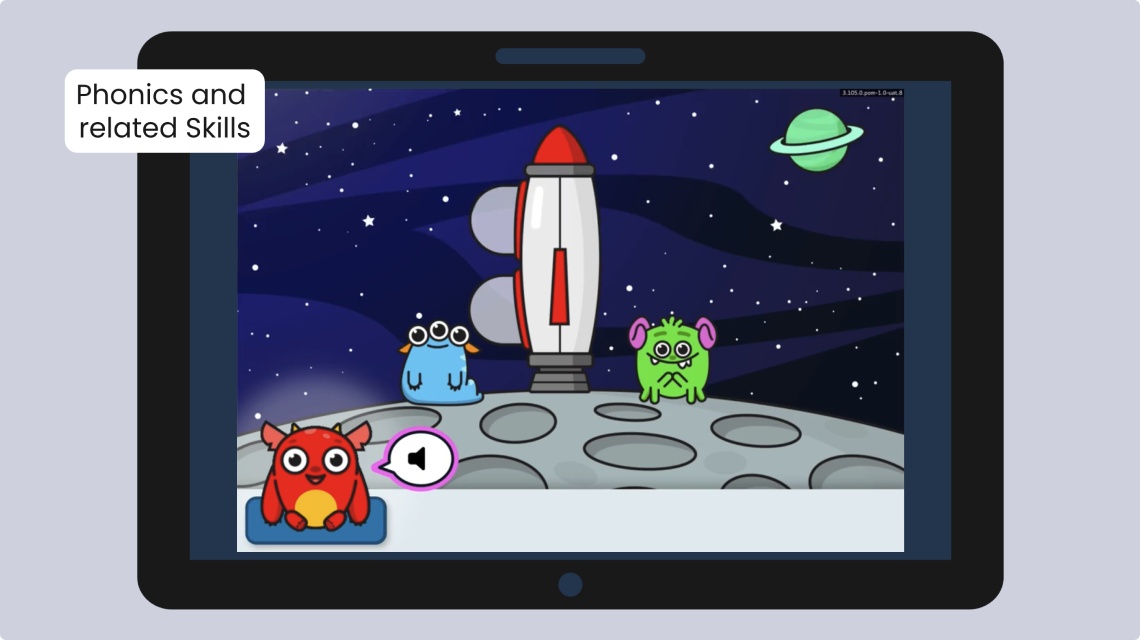
Watch how the character-guided assessment takes students through engaging literacy tasks while delivering valuable insights for educators.
Why schools are choosing PAT Early Literacy

Designed for young learners
A guided, story-based experience promotes student engagement and encourages interaction with assessment content.

Adaptive assessment
Each student is assessed at an appropriate level, improving measurement precision without increasing testing time.

Part of the PAT suite
Provides a continuous view of literacy development from the early years through to later schooling.
A complete picture of early literacy
All decoding strands, listening comprehension and reading comprehension are assessed to provide a deeper understanding of each student's literacy development.

Trusted, evidence-informed assessment
Built on ACER's research and assessment expertise to provide reliable, meaningful data for teaching.
Experience PAT Early Literacy in your school
Discover how a connected view of Phonics and Related Skills, Listening Comprehension and Reading Comprehension can support early literacy teaching and learning.
PAT Suite customers
Start a free trial and take advantage of PAT Suite bundle pricing
Current PAT Early Years Reading users
Upgrade to PAT Early Literacy at no additional cost for the remainder of your licence period
New to PAT?
Start your free 30-day trial today
Related news




FAQs
What is PAT Early Literacy?
PAT Early Literacy is a comprehensive early literacy assessment program for Foundation and Year 1 students. It assesses three connected domains:
- Phonics and Related Skills
- Listening Comprehension
- Reading Comprehension
Together, these assessments provide educators with a deeper understanding of how students are developing as readers, supporting informed teaching and intervention decisions.
Why assess literacy in the early years?
Early literacy development underpins learning across the curriculum. Identifying learning needs early enables schools to provide timely support before gaps widen and become more difficult to address.
The Early Literacy assessment program provides structured evidence that can support teaching decisions and help schools target support early and where it is needed most.
What age group is PAT Early Literacy designed for?
PAT Early Literacy is primarily designed for students in Foundation and Year 1. Some assessments may also be suitable for students in later primary years who require assessment of foundational literacy skills.
What is assessed in PAT Early Literacy?
PAT Early Literacy assesses three domains:
- Phonics and Related Skills
- Listening Comprehension
- Reading Comprehension
Each domain is further organised into strands and strand processes to support more detailed diagnostic understanding. For example, the strands of Phonics and Related Skills are phonological awareness, phonemic awareness and phonics.
Why does PAT Early Literacy include listening comprehension?
Listening comprehension is a critical foundation for later reading comprehension.
Young learners can often understand spoken language that is more complex than the text they can independently read. Assessing listening comprehension helps educators better understand language comprehension development and identify potential strengths and learning needs that may not be visible through decoding assessments alone.
Why are phonics and comprehension reported separately?
Reading is not a single skill.
Research shows that skilled reading depends on both decoding and language comprehension. Students may demonstrate strengths in one area and need support in another.
Assessing and reporting these areas separately provides educators with a clearer understanding of individual learning needs.
Does PAT Early Literacy align with the Science of Reading?
PAT Early Literacy draws on established research about how children learn to read and reflects key insights from the Science of Reading, including the importance of both decoding and language comprehension in reading development.
Do these assessments have supporting resources?
Teacher resources will be available through the PAT Teaching Resources Centre in 2027. These resources are designed to support interpretation and classroom application of assessment results.
Is PAT Early Literacy a screener?
PAT Early Literacy is a diagnostic assessment program.
Screening tools are typically designed to identify students who may be at risk and who may require further investigation. PAT Early Literacy provides more detailed information across multiple literacy domains to support decisions about teaching and learning.
The assessments are designed to complement screening tools rather than replace them.
Does PAT Early Literacy replace phonics checks?
No.
Phonics checks and other screening tools play an important role in early identification. PAT Early Literacy is designed to complement these approaches by providing additional information about phonics and related skills, listening comprehension and reading comprehension.
What information do teachers receive?
Teachers receive reporting designed to support understanding of student strengths, gaps and next steps.
Reporting includes: Domain-level results with
- Strand-level information
- Strand process information
- Text type information
- Curriculum references
- Reading Comprehension scale scores
- Listening Comprehension scale scores
- Diagnostic reporting for Phonics and Related Skills
Results are available through the ACER Data Explorer.
Can PAT Early Literacy measure student growth?
Reading Comprehension and Listening Comprehension are reported on scales that support progress monitoring over time.
Reading Comprehension is reported on the PAT Reading scale, enabling schools to continue monitoring reading growth as students move into later PAT Reading assessments.
Phonics and Related Skills results are not aligned to a described achievement scale. This is because, while these skills are pre-requisites for future growth in reading comprehension, they are 'constrained' – growth in these skills stops once they are mastered. For this reason, assessment results are presented at the item, strand and strand process levels, allowing for diagnostic analysis to support the understanding of students' needs.
Why doesn't Phonics and Related Skills have a scale score?
Phonics and related skills develop differently from comprehension.
Many phonics skills are mastered within a relatively narrow developmental period. For this reason, PAT Early Literacy reports mastery and diagnostic information at the item, strand and strand process levels, helping teachers understand the specific skills students have mastered and those that may require further support.
How does adaptive testing work?
Listening Comprehension and Reading Comprehension use adaptive test designs.
Students begin at an appropriate starting point and their responses determine the next set of questions they receive. This improves measurement precision and helps ensure students are working at an appropriate level of challenge throughout the assessment.
How is PAT Early Literacy administered?
PAT Early Literacy is delivered online using ACER's assessment platform.
Students are guided through assessments by a character-led, story-based experience that includes audio instructions, embedded practice questions and encouragement throughout the assessment.
Can students complete the assessment independently?
The assessment has been designed to support independent participation by young learners.
Audio guidance, simplified navigation, embedded practice and consistent response formats help reduce the amount of direct support students require during testing. Teacher supervision remains important.
Is PAT Early Literacy suitable for whole-class administration?
PAT Early Literacy has been designed for practical use in early years classrooms and is suitable for small-group administration.
Recommended administration is in groups of approximately 6–10 students, depending on student needs and familiarity with technology.
How often should students be assessed?
For Reading Comprehension and Listening Comprehension, a gap of approximately 9–12 months between testing sessions is recommended when monitoring growth.
Growth in phonics and related skills can be swift amongst young learners and is commonly tied to what is explicitly taught in the classroom. It may not be necessary to assess all students at each test level within the first two years of school. Teachers should review the content of each Phonics and Related Skills test form and use professional judgement when deciding which students to assess, with which test form, and how frequently. The three tests increase in difficulty, with Test 1 being the easiest.
What devices can students use?
PAT Early Literacy is designed for tablet delivery but can also be completed on laptops and desktop devices.
Are headphones required?
Headphones are required for all students completing PAT Early Literacy assessments.
How long do the assessments take?
The recommended time for each assessment is approximately 30 minutes. This should be sufficient, but some additional time may be allowed if students are working productively.
What is the relationship between PAT Early Years Reading and PAT Early Literacy?
PAT Early Literacy builds on the foundations of PAT Early Years Reading while providing a more comprehensive and diagnostic assessment experience.
The new assessment program includes richer reporting, greater diagnostic insight, dedicated Listening Comprehension assessment, adaptive assessment design and stronger links to the broader PAT ecosystem.
Are the same skills assessed?
Many of the same foundational literacy skills are assessed.
The key difference is that PAT Early Literacy provides greater depth and breadth of assessment and richer reporting across phonics and related skills, listening comprehension and reading comprehension.
Should schools continue using PAT Early Years Reading?
PAT Early Literacy is the recommended assessment program for new implementation and future use.
Schools currently using PAT Early Years Reading are encouraged to explore PAT Early Literacy and consider transitioning when appropriate for their assessment program.
Will PAT Early Years Reading remain available?
PAT Early Years Reading will remain available during a transition period of around 18 months.
Support will continue over this period, and ACER will communicate clearly with schools about timelines and any changes to product availability.
Can historical PAT Reading results be compared directly with PAT Early Literacy results?
PAT Early Literacy Reading Comprehension student results are reported on the PAT Reading achievement scale, enabling meaningful comparison with results from PAT Early Years Reading (End Year 1), PAT Reading 5th Edition and PAT Reading Adaptive assessments.
Why is PAT Early Literacy reported differently to PAT Early Years Reading?
PAT Early Literacy is reported in the ACER Data Explorer which facilitates flexible and interactive reporting of new and historical results. It allows you to view and analyse your students' results in one location.
Reports are centred around the achievement scales and described achievement bands for each domain or learning area, placing the focus on where each student currently is in their learning progress and how to support their next steps.
As students completing PAT Early Literacy Listening Comprehension or Reading Comprehension will not all see the same set of items in their tests, the Item Performance report allows you to analyse your students' results on each test item to identify strengths and weaknesses within the group.
Is a free trial available?
Yes. Schools can access a 30-day free trial to explore PAT Early Literacy before purchasing.
Is PAT Early Literacy part of the PAT suite?
Yes. PAT Early Literacy is part of the PAT suite and integrates with PAT reporting tools, including the ACER Data Explorer. Reading Comprehension aligns to the PAT Reading scale, supporting continuity of assessment from the earliest years through later schooling.
Does PAT Early Literacy include teaching resources?
Teaching resources designed to support interpretation and classroom application of assessment results will be available through the PAT Teaching Resources Centre in 2027.
What professional learning is available?
ACER is pleased to offer a series of webinars targeted to schools using, or about to use, the PAT Progressive Achievement suite online. View our upcoming webinars and workshops. Our friendly support support team is available via phone and email (Monday to Friday, 8:00 AM-5:00 PM AEST), ensuring timely responses to school queries.
How much does PAT Early Literacy cost?
PAT Early Literacy is available through a 12-month licence or on a per-student basis. Existing ACER users can purchase PAT Early Literacy through their school account as an additional assessment at a reduced price. New users can refer to pricing here and get in touch with our friendly support team to be up and running in no time. Licence pricing is based on school enrolment size and assessments purchased.